
7 Leadership Truths for Real Estate Leaders Heading Into 2027

Leadership has never been about having all the answers.
As we head into 2027, I think the businesses that will thrive will be led by people who create clarity, reduce friction, build capability and bring positive energy to the people around them, while still being prepared to have the conversations and make the decisions that leadership requires.
Because leadership shows up everywhere.
It’s in the words you use when something goes wrong.
It’s in the behaviour you recognise and reward.
It’s in the standard you walk past.
It’s in whether you do what you said you would do.
And it’s especially visible when things get hard.
People notice what leaders repeatedly say, do, celebrate and tolerate.
Those actions shape behaviour. Behaviour shapes culture. And culture ultimately shapes performance.
What thriving businesses give their people
Great agents and property managers don't stay simply because of a commission split or salary.
They stay where they can do great work, continue to grow and feel part of something they believe in.
The businesses I see doing this well consistently provide six things:
Less friction. Systems, processes and administrative support that remove unnecessary work and give people more time for clients, conversations and revenue-producing activity.
Speed. Clear decision-making, timely approvals and fast marketing turnaround. In competitive markets, unnecessary delays cost opportunities.
Best-in-class agency services and marketing. A brand, campaigns, tools and support that help people win business and grow market share.
Coaching, training and accountability. Clear expectations and a pathway for people to improve their skills, grow their business and progress their careers.
Reward and recognition. Celebrate the result, but recognise the behaviours that created it too. What gets recognised tends to get repeated.
Culture and experience. Create a workplace people are proud to belong to and confident recommending to others. Your people can become your greatest recruitment advocates.
But none of those things operate in isolation.
Underneath them sits leadership.
When I look at the leaders building strong, sustainable and profitable real estate businesses, seven leadership truths consistently stand out.
1. Choose trust and respect over popularity
Leadership requires decisions that won't always be popular.
That's part of the responsibility.
You won't always get agreement, but you can build trust through consistency, transparency and fairness.
If your people understand what you stand for, know your values and see consistency between what you say and what you do, they are far more likely to follow you through difficult decisions.
Being trusted and respected matters more than being universally liked.
And importantly, respect doesn't need to come at the expense of warmth.
You can be kind and accountable.
Positive and direct.
Empathetic and commercially disciplined.
Great leadership requires both.

2. Decide, communicate, then commit
Your team can't always see everything you're weighing up.
Cash flow. Other stakeholders. Franchise obligations. Client considerations. Risk. The consequences of losing a key person. Longer-term strategy.
That's why communication around change matters.
Before and during significant change:
Provide context, not just instructions.
Explain the why, not simply the what.
Use facts and data where they help create understanding.
Give people the coaching, resources and confidence to implement the change.
Be clear about what isn't changing as well as what is.
Once the decision is made, commit to it.
Your words matter enormously in these moments.
If leaders constantly talk about how hard something will be, teams hear fear.
If leaders ignore the difficulty and pretend everything is wonderful, teams lose trust.
The better position is grounded optimism:
“This will challenge us. Here’s what we can control. Here’s what we're going to do next. And here’s how we'll support each other to get there.”
That is positivity with substance.
And when you get something wrong, own it.
Apologise. Take responsibility. Fix what you can and explain what you're doing differently.
Accountability doesn't weaken leadership. It strengthens trust.

3. Close the gap between saying and doing
Your values aren't the words on the boardroom wall.
Your values are what people experience.
If we say people matter but repeatedly cancel their one-on-ones, they'll notice.
If we say accountability matters but don't address poor behaviour, they'll notice.
If we say client experience matters but tolerate slow communication, they'll notice that too.
Every inconsistency creates a small credibility gap.
And every time your actions match your words, you make a deposit into the trust account.
One of the simplest leadership questions I know is:
“If my team copied my behaviour for the next 90 days, would our business get better?”
That's worth sitting with.

4. Execution is the example you set
Accountability starts with the leader.
Keep your deadlines. Follow through. Prepare properly. Arrive on time. Bring energy and something useful to the conversation.
If you want greater discipline from your team, demonstrate greater discipline yourself.
A few simple meeting habits can change a culture:
Send meeting invitations with an agenda.
Be clear about what decision or outcome is required.
Question meetings without a clear purpose.
Allow a 20 to 30-minute buffer where possible so you can reset, think and prepare.
Finish with actions, owners and deadlines.
None of this is revolutionary.
That's the point.
High performance is often less about finding another big idea and more about consistently executing the fundamentals.
Move quickly where it matters and remain calm where it counts.
Slow is smooth, and smooth is fast.

5. Think a move ahead
The best leaders don't spend their entire week reacting.
They deliberately make time to look upstream.
Ask your leadership team:
What could happen next?
Where are we exposed?
Where is the opportunity?
What aren't we talking about?
If this happened tomorrow, what would we do?
Work through scenarios together.
What if a top performer leaves?
A major listing falls over?
A compliance issue emerges in property management?
A competitor recruits from your team?
A technology platform changes?
Your enquiry levels suddenly increase or fall?
Don't do the thinking alone.
Bring future leaders into these conversations and let them practise problem-solving, scenario planning and commercial decision-making.
You're not simply solving tomorrow's problems.
You're developing tomorrow's leaders.

6. Adopt technology with purpose, and go first
Years ago I used to say:
“I don't do technology.”
Then I realised that if I didn't do technology, technology was going to do me.
That lesson has never been more relevant.
AI and automation are becoming part of prospecting, appraisals, marketing, property management, communication and increasingly the everyday workflow of a real estate business.
But adopting technology isn't leadership in itself.
Purposeful adoption is.
My rule is simple:
Adopt technology when it improves the experience for your people or your clients, reduces unnecessary friction or makes the business more effective. Don't adopt it simply because it's new.
And once you've made the decision, implement it properly.
Train people. Set expectations. Build capability. Explain the reason behind it. Measure whether it's actually producing the outcome you wanted.
Most importantly, leaders need to go first.
If you're asking your team to change the way they work while you continue operating the old way, don't be surprised when adoption stalls.
Visible leadership creates permission for change.

7. Consistency builds trust
People should know which version of their leader is going to walk through the door.
That doesn't mean pretending everything is perfect.
It means being consistent in your demeanour, your expectations, your values and the way you treat people.
And that includes every team member, not simply your highest performers.
One commitment I feel strongly about:
Protect your one-on-ones.
Don't repeatedly cancel, move or arrive late to them.
During my time as a franchisee and later as a franchisor, I saw how quickly this can undermine a leader's credibility.
Your calendar communicates priorities, often more loudly than your words do.
Leadership is relational too.
Know your people beyond their KPIs. Know what's important to them. Understand their ambitions. Celebrate what's happening in their lives. Make time during the year to sit down over a coffee or breakfast without turning every conversation into a performance review.
When people know they matter as people, not simply as producers, relationships change.
Loyalty goes both ways.
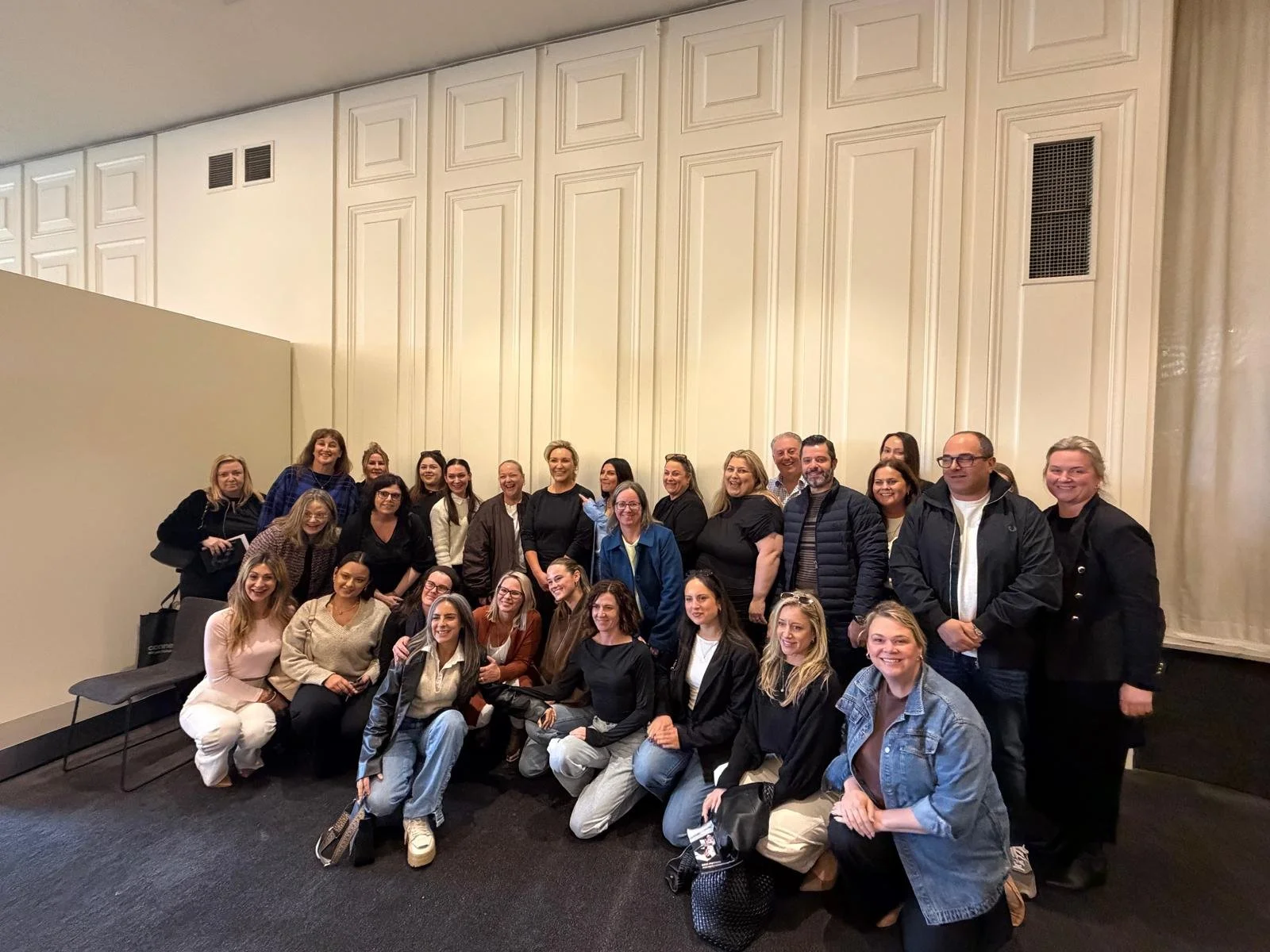
Bonus: Get outside your own four walls
None of us has a monopoly on good ideas.
Make a habit of learning outside your own business and, importantly, outside the real estate industry.
Spend time with strong leaders. Visit high-performing businesses. Observe other sales and property management meetings where appropriate. Talk to suppliers and business partners. Have lunches that include real conversations, ideas and outcomes.
And if you think you're the best at something, go and find someone who's better.

Stay curious enough to learn and humble enough to change
Join REGROWTH STUDY TOURS
Your 2027 Leadership Check
Before you finalise the business plan, take 10 minutes and score yourself honestly from 1 to 10 against each statement:
☐ Our people are clear on our vision and non negotiables
☐ Our team understands the why behind important decisions.
☐ We take ownership when we get something wrong.
☐ Our actions consistently match our words.
☐ We use language that creates clarity, possibility and action rather than unnecessary fear or negativity.
☐ We recognise the behaviours we want repeated, not only the end result.
☐ We are prepared, punctual and follow through on commitments.
☐ We protect our one-on-ones with our people.
☐ Our technology decisions have a clear purpose and are properly implemented.
☐ We have deliberately learned from leaders outside our business in the past 90 days.
☐ Our people would say our business makes it easier for them to do great work.
☐ Every person understands what growth and progression can look like here.
Anything below 7 deserves attention.
Not judgement. Attention.
Pick one or two areas, decide what behaviour needs to change and start there.
Because small improvements, consistently applied, compound.
Leadership is your legacy.
I think about leadership as both a philosophy and a legacy.
It is what people learn from you, what they carry forward and, eventually, how they lead others because of their experience with you.
So as we head into 2027, perhaps the challenge isn't to become a completely different leader.
It's to become a little more intentional.
Be clearer with your words.
More consistent with your actions.
More deliberate about the behaviour you recognise.
More curious about what's possible.
More positive about what can be changed.
More accountable for what sits within your control.
And celebrate the progress along the way.
None of us has leadership completely figured out.
But whatever level we lead at, we can all get 1% better.
Your systems can be copied.
Your technology can be copied.
Your marketing can be copied.
Even your strategy can eventually be copied.
But the experience of being led by you can't be.
That's your leadership legacy.
And it might just be one of your greatest competitive advantages.